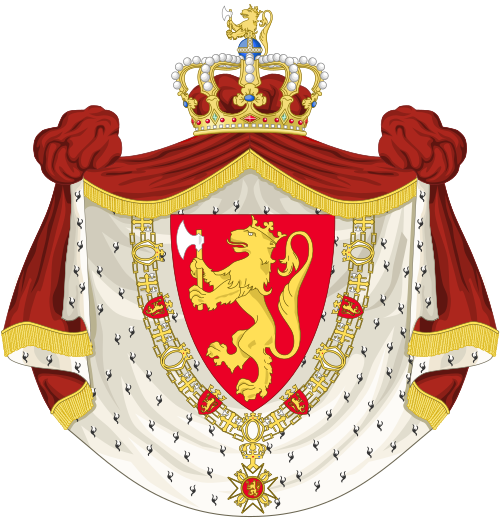
Royal Coat of Arms of Norway. Authorage: Wikipedia/S. Solberg J.
Staying with Scandinavia for the moment, we come to Norway, a country with a long heritage but which was in and out of unions with its neighbours and did not achieve proper independence until 1905.
The Norwegian Royal Coat of Arms originated in the 13th century with just a golden lion on a red shield. The silver axe was added late in the century to symbolise St Olaf (King Olaf II), said to be the ‘Eternal King of Norway’. The design represents the Sverre dynasty but was quartered with the coat of arms of the Bjälbo (or Bjelbo) which was connected to the Folkung dynasty in Sweden. The Sverre dynasty became extinct in 1319, but the Sverre coat of arms have lived on to represent Norway.
The Norwegian Royal Coat of Arms originated in the 13th century with just a golden lion on a red shield. The silver axe was added late in the century to symbolise St Olaf (King Olaf II), said to be the ‘Eternal King of Norway’. The design represents the Sverre dynasty but was quartered with the coat of arms of the Bjälbo (or Bjelbo) which was connected to the Folkung dynasty in Sweden. The Sverre dynasty became extinct in 1319, but the Sverre coat of arms have lived on to represent Norway.
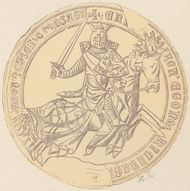 Seal of Haakon Haakonsson the Young (1250) - Source Brinchmann, Chr. "Norske Konge-sigiller og andre Fyrste-sigiller fra Middelalderen" (1924). Authorage: Wikipedia/Drawing by Hakon Thorsen (d. before 1924)
 A lion is shown on the coat of arms on the seal of Earl Skule Bårdsson, dated 1225, who acted as Regent to Haakon Haakonson the Old, who in turn had a lion on his seal but shown lying between his feet. A royal coat of arms with a lion is finally seen on the seal of Haakon Haakonson the Young, dated 1250. The first instance of the lion bearing an axe is found in a seal of Eric II,1285 (pictured left). Its 13th-century origins make it amongst the oldest state coats of arms which remain in contemporary use.
The axe tended to be depicted with a very long and, more often than not, curved shaft during the 19th Century. However, the style reverted to the depiction of a simple battle-axe as shown in late medieval designs when a new design by Eilif Peterssen was introduced on independence in 1905. This was changed in 1937 when a new, simplified design was introduced by state archivist Hallvard Trætteberg.
A Member of a Scandinavian heraldry society confirms that there is no differencing of arms within the Norwegian Royal Family, other than the use of Crowns and Coronets. There is no dynastic shield, presumably because as, Prince Carl of Denmark became King Haakon VII in 1905, it would be the same as Denmark. But also, Carl requested a referendum of the Norwegian people before he would accept the Throne of his new homeland and, as such, considered that the new Royal Family was henceforth Norwegian, full stop. His son, Alexander, who was only two at the time, had his name changed to Olav.
There are no dukedoms and therefore no subsidiary titles in Norway either.
Even the Coat of Arms of Her Majesty Queen Sonja is technically exactly the same as her husband HM King Harald V, as at the top of the article. The same shield, the same crown, as shown on Her Majesty’s stall plate for the Danish Order of the Elephant (below left). The only difference that I know of can be seen on her stall plate for the Swedish Order of the Seraphim, where the Arms are depicted on an oval rather than a shield (bottom right, the top shield behind her daughter, HRH Princess Martha Louise). But this is more artistic license to fit in with the style of other stall plates within that Order.
The axe tended to be depicted with a very long and, more often than not, curved shaft during the 19th Century. However, the style reverted to the depiction of a simple battle-axe as shown in late medieval designs when a new design by Eilif Peterssen was introduced on independence in 1905. This was changed in 1937 when a new, simplified design was introduced by state archivist Hallvard Trætteberg.
A Member of a Scandinavian heraldry society confirms that there is no differencing of arms within the Norwegian Royal Family, other than the use of Crowns and Coronets. There is no dynastic shield, presumably because as, Prince Carl of Denmark became King Haakon VII in 1905, it would be the same as Denmark. But also, Carl requested a referendum of the Norwegian people before he would accept the Throne of his new homeland and, as such, considered that the new Royal Family was henceforth Norwegian, full stop. His son, Alexander, who was only two at the time, had his name changed to Olav.
There are no dukedoms and therefore no subsidiary titles in Norway either.
Even the Coat of Arms of Her Majesty Queen Sonja is technically exactly the same as her husband HM King Harald V, as at the top of the article. The same shield, the same crown, as shown on Her Majesty’s stall plate for the Danish Order of the Elephant (below left). The only difference that I know of can be seen on her stall plate for the Swedish Order of the Seraphim, where the Arms are depicted on an oval rather than a shield (bottom right, the top shield behind her daughter, HRH Princess Martha Louise). But this is more artistic license to fit in with the style of other stall plates within that Order.
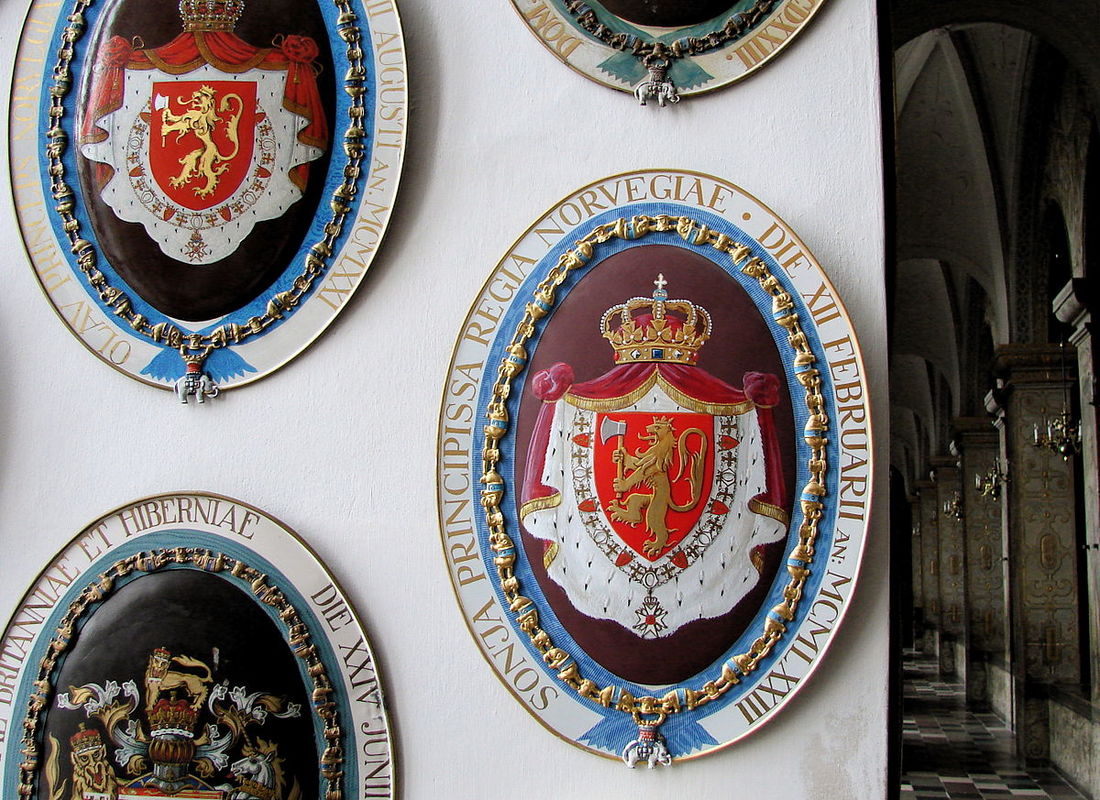
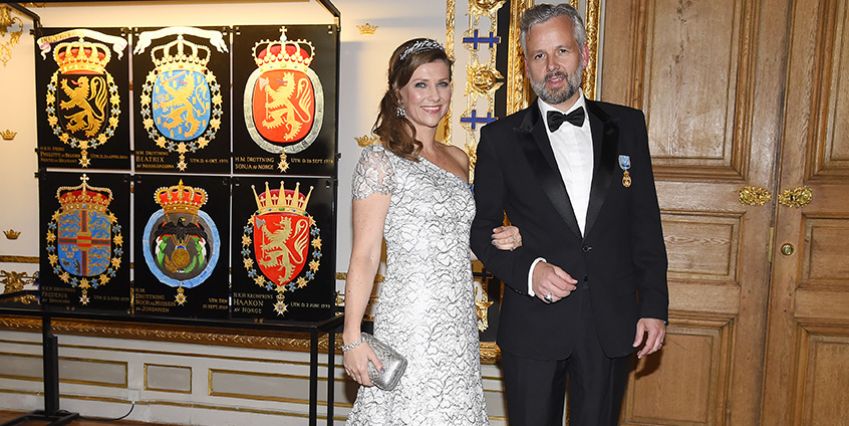
Below Her Majesty's Seraphim Stall Plate is that of her son, HRH Crown Prince Haakon. Again, it is the same Coat of Arms, but this time differenced by a Princely Crown.
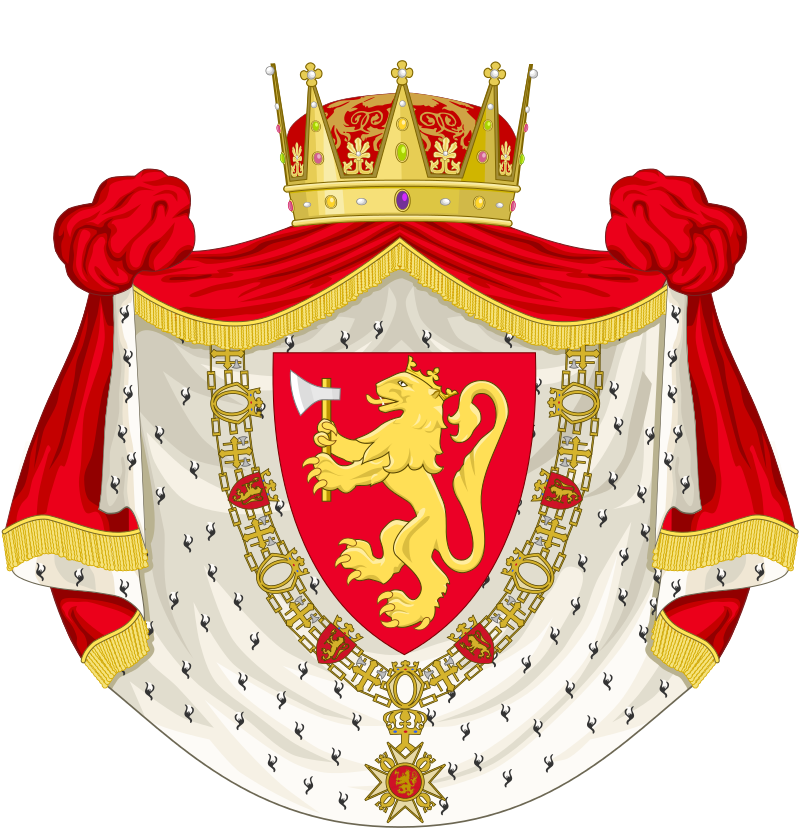
Coat of Arms of HRH Crown Prince Haakon of Norway. Authorage: Wikipedia/Ssolbergj; Glasshouse
Presumably, his wife, HRH Crown Princess Mette-Marit, has the same Coat of Arms as him with the provision that artists may depict her Arms on an oval. I have yet to see a depiction of any stall plate for her and am also not aware of any stall slates for the Norwegian Order of St. Olav.
What I did see, a few years ago, was a line drawing of a Coat of Arms for Haakon and Mette-Marit's daughter, HRH Princess Ingrid Alexandra. This design, though, will have been from an artist's imagination, especially considering that she has not yet reached her majority. Unfortunately, I cannot find it again but I recall that it was simply the Royal Arms depicted on a lozenge and topped with a Princely Coronet.
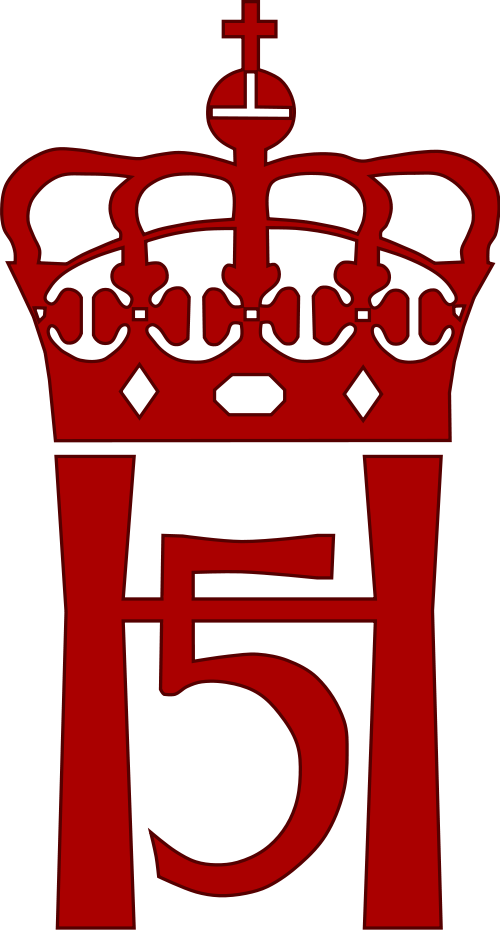
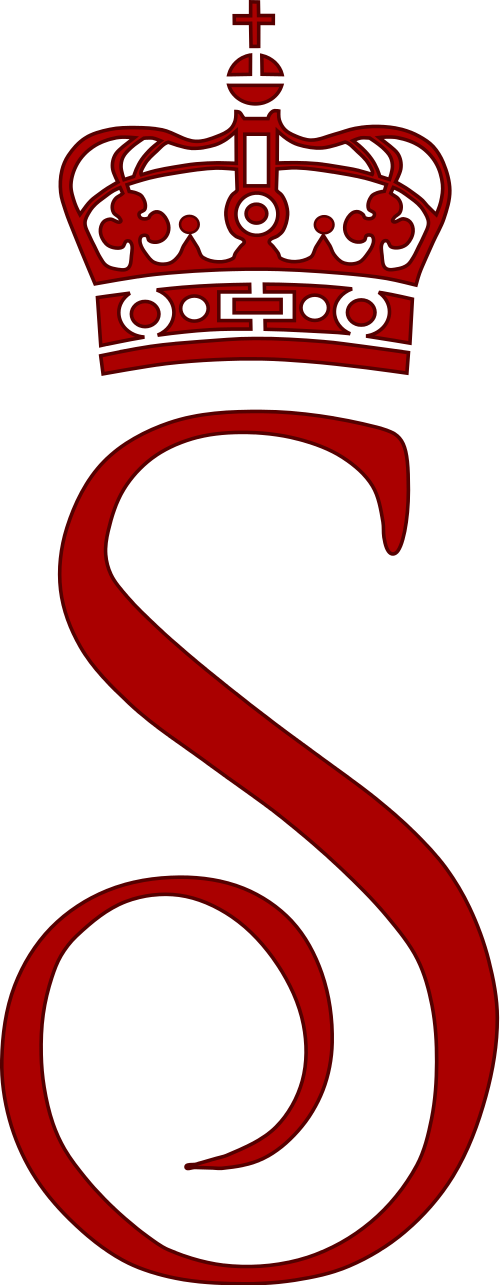
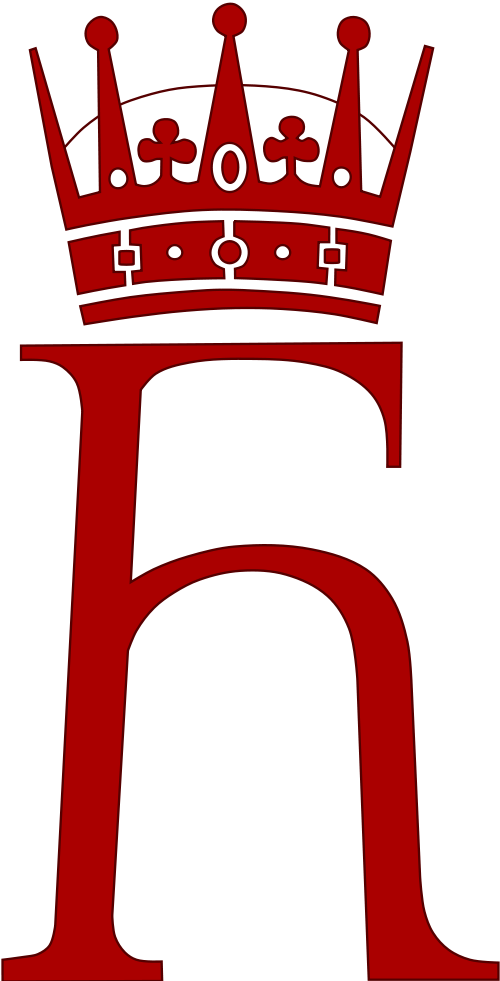
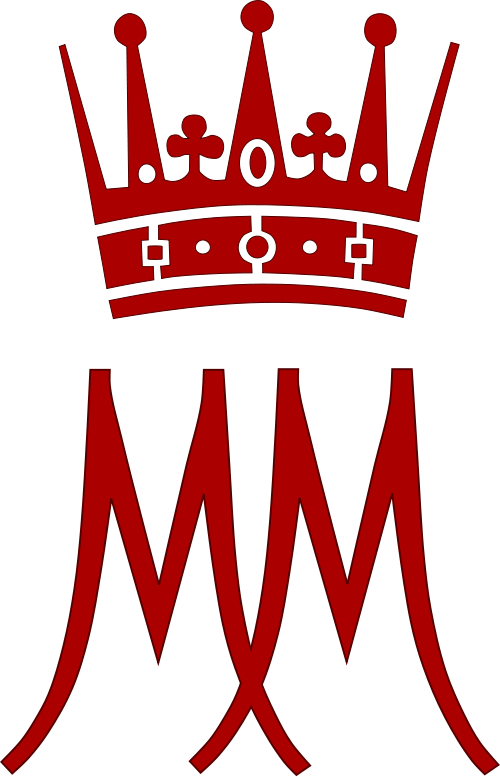
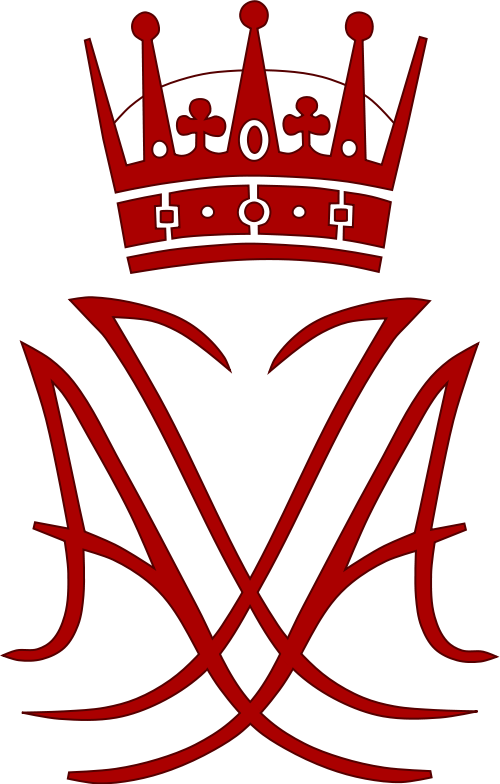
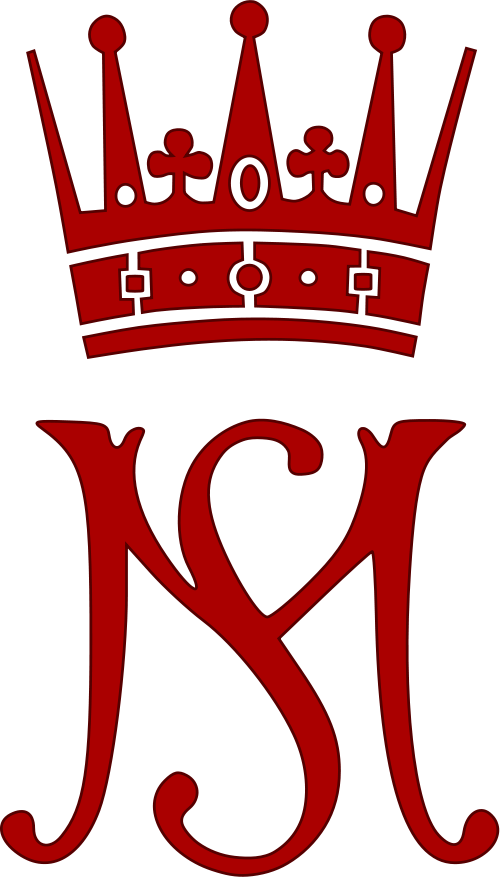
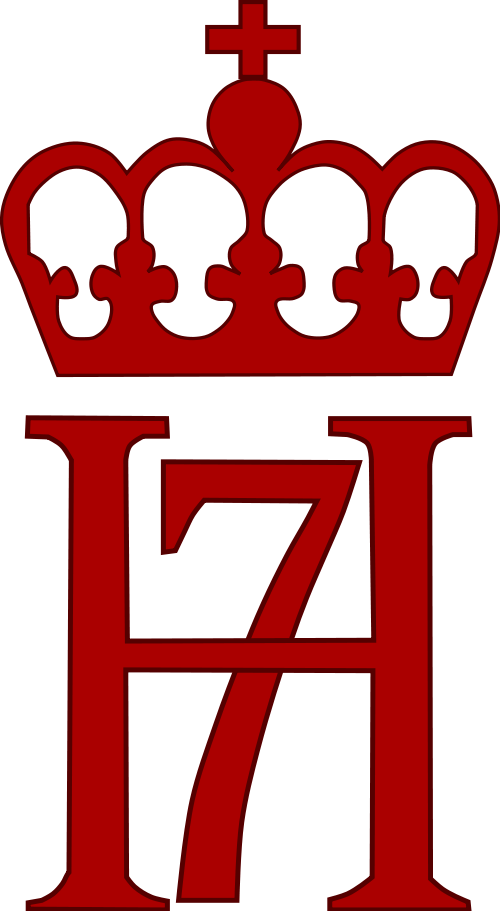
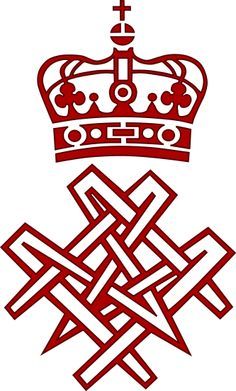
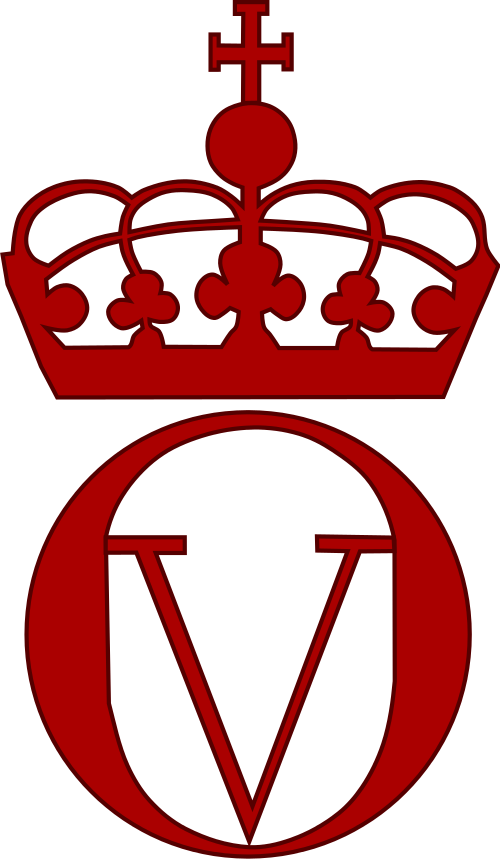
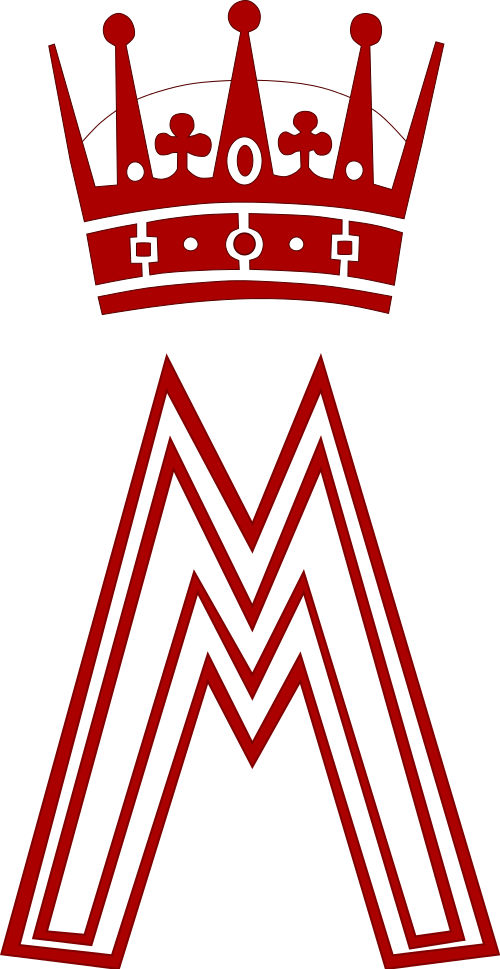
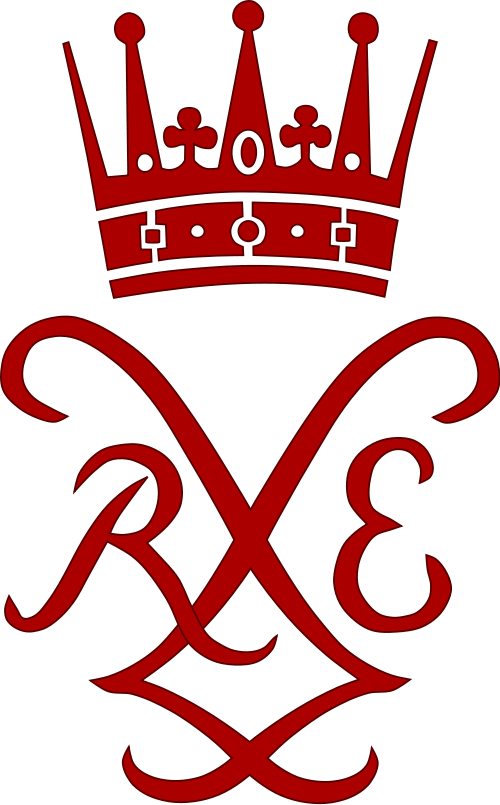
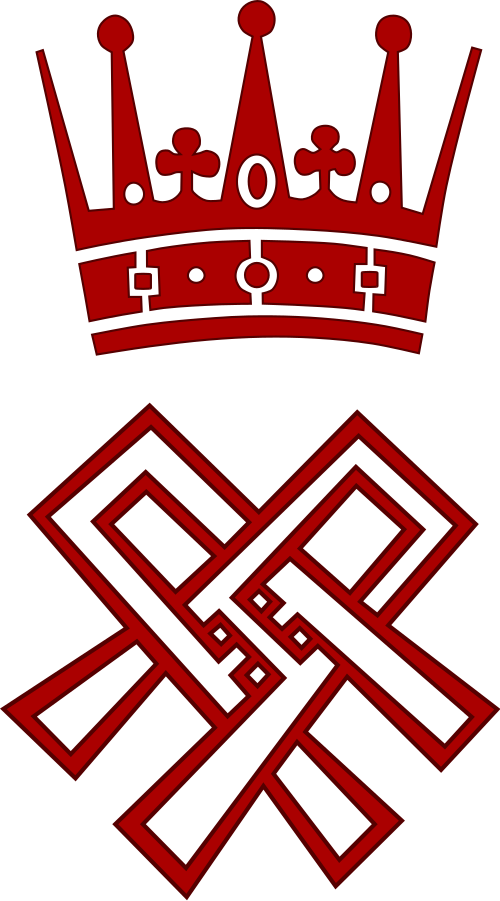
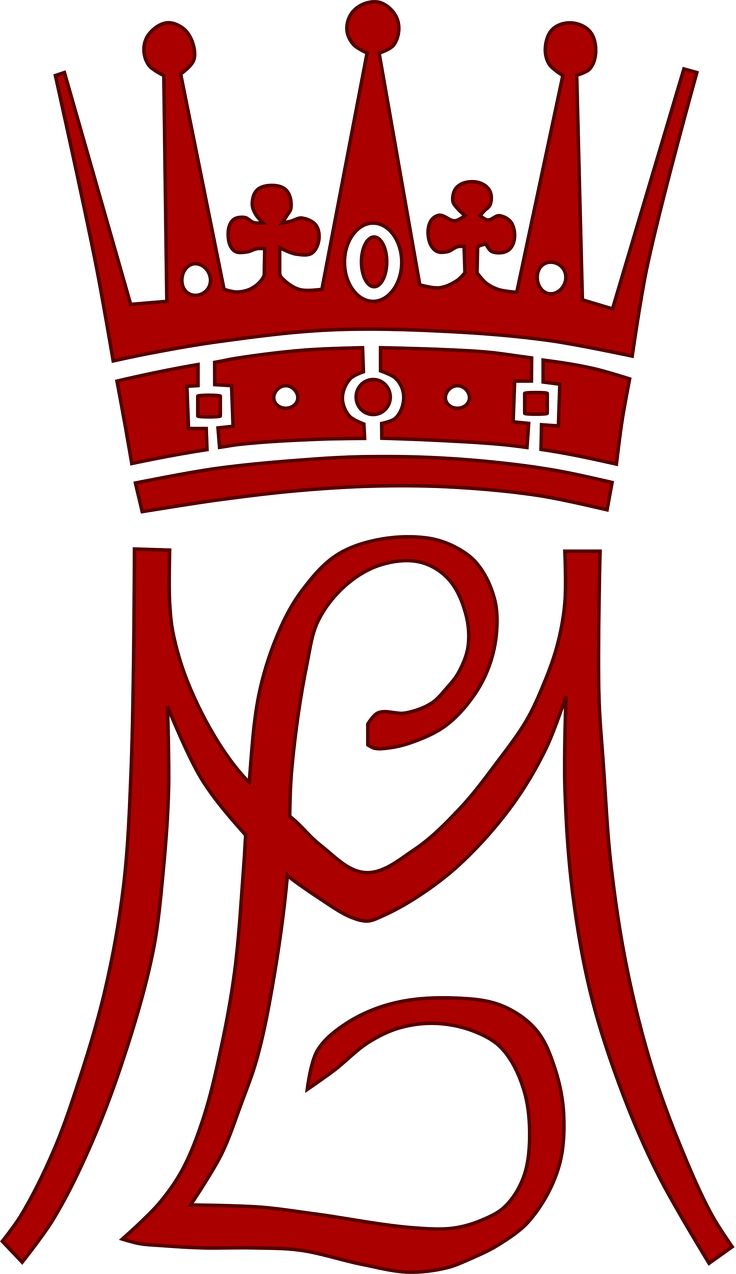
What the Norwegian Royal Family does make use of, in typical Scandinavian style, is Monograms as follows:
What I did see, a few years ago, was a line drawing of a Coat of Arms for Haakon and Mette-Marit's daughter, HRH Princess Ingrid Alexandra. This design, though, will have been from an artist's imagination, especially considering that she has not yet reached her majority. Unfortunately, I cannot find it again but I recall that it was simply the Royal Arms depicted on a lozenge and topped with a Princely Coronet.
What the Norwegian Royal Family does make use of, in typical Scandinavian style, is Monograms as follows:
 RSS Feed
